Compare Pilates and Yoga: Which One Is Better for You? (Science-Based)
If you're trying to compare pilates and yoga, you're probably not looking for a debate. You're looking for a plan—something you can do consistently that helps your body feel more supported and your mind feel less scattered. Here's a science-based guide to help you choose (or combine) both.
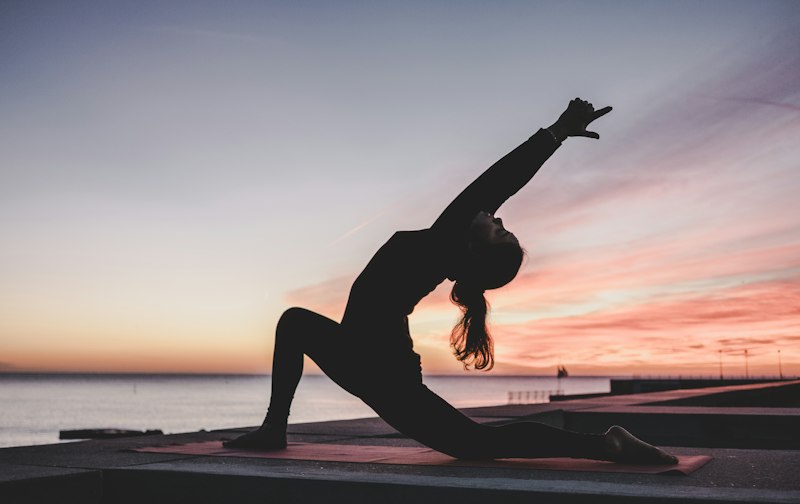
Before we get too "Which one is better?", I want to name something honest. Comparison can be helpful for clarity, but it can also mess with your head.
"The ego lives through comparison."
— Eckhart Tolle, A New Earth
So yes, we'll compare pilates and yoga. But we'll do it in a way that helps you choose what fits your body and life, not what makes you feel behind.
What is Pilates?
Pilates is a movement system built around controlled strength, stability, posture, and alignment. Most Pilates classes emphasize:
- Core stability (deep abdominals, pelvic floor, spinal support muscles)
- Precise movement patterns with repeatable cues
- Breath coordinated with effort
- Posture and alignment to move efficiently and reduce strain
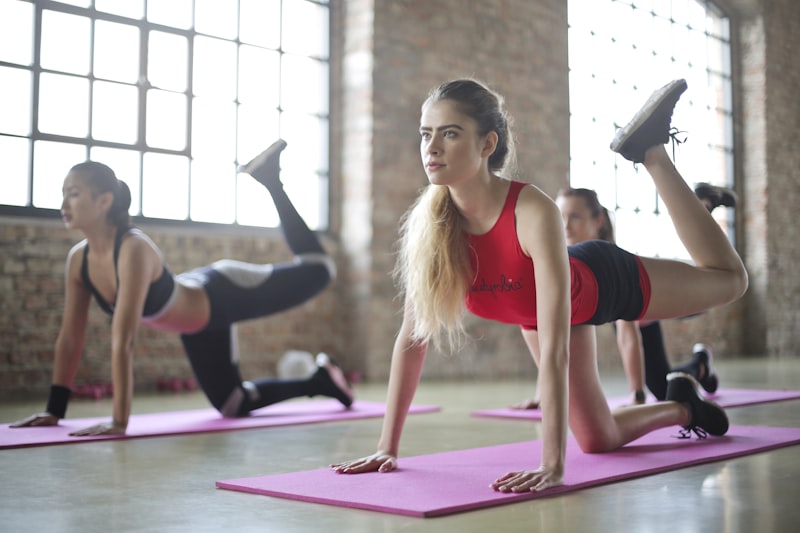
Pilates can be mat-based or equipment-based (like the Reformer). If you want to compare pilates and yoga by "workout feel," Pilates is typically more consistent in intensity. You'll likely feel a steady burn in your core, glutes, and postural muscles.
What is Yoga?
Yoga comes from the Sanskrit root yuj, meaning "to yoke" or "to unite"—traditionally understood as uniting the individual self (Atman) with universal consciousness or the Divine (Brahman).
Yoga is a broad umbrella practice with an eight-limbed path (Ashtanga Yoga):
- Yama (ethical restraints, how we relate to others)
- Niyama (personal observances, how we relate to ourselves)
- Asana (postures, a steady and easeful seat/body)
- Pranayama (breath regulation, working with life force)
- Pratyahara (withdrawal of the senses, turning inward)
- Dharana (concentration, training attention)
- Dhyana (meditation, sustained awareness)
- Samadhi (absorption, integration, liberation)
In modern settings, many teachers focus mainly on asana and pranayama (and sometimes attention training), which is still a meaningful place to begin. But yoga is designed to shape how you live, how you relate to yourself and others, and how you meet life with clarity and steadiness—not just what you do on a mat.
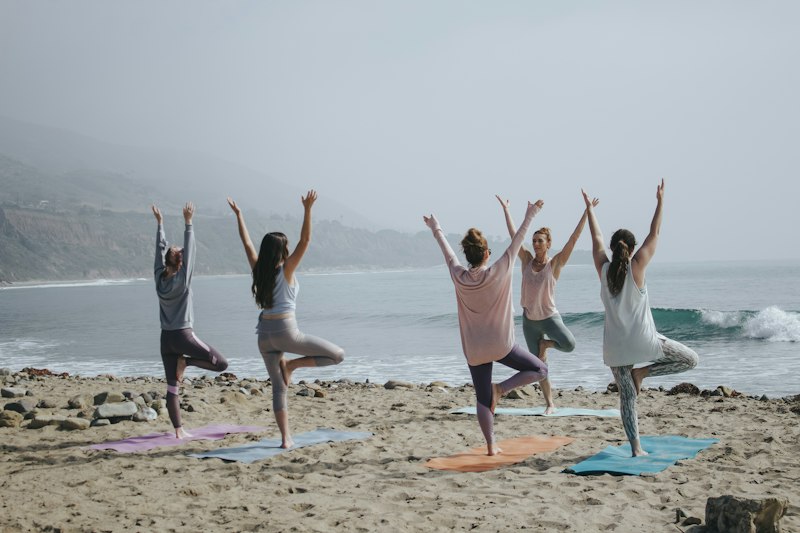
Yoga ranges from restorative (very gentle) to athletic (power/vinyasa). If you compare pilates and yoga asanas, yoga often feels more varied: standing work, balance, gentle stretching, strength holds, and usually a longer rest at the end.
Compare Pilates and Yoga: The main difference in intention
Here's the simplest way to compare pilates and yoga:
- Pilates is primarily a conditioning and rehabilitation-friendly movement system: stability, alignment, strength, control.
- Yoga is a mind-body and spiritual practice: movement + breath + attention, grounded in ethics, philosophy, and meditation as part of the path.
That doesn't mean Pilates can't be mindful. And it doesn't mean yoga can't build serious strength. But your experience will usually reflect the "center" of each method.
Compare Pilates and Yoga for strength and muscle tone
Both build strength. They just build it differently.
Pilates strength
Pilates is more targeted and systematic for:
- Deep core endurance
- Pelvic and spinal stability
- Glute and hip strength
- Postural muscles (upper back and shoulder stability)
There's also research behind it. A 2024 systematic review and meta-analysis found Pilates can improve pain intensity and disability in people with low back pain compared to controls (results vary depending on program and population).
Yoga strength
Yoga builds strength through:
- Bodyweight holds (planks, chair pose, lunges)
- Slow transitions
- Balance challenges
- Integrated full-body engagement
Yoga is often "whole-body strength through shapes," while Pilates is "strength through precision and control."
If your goal is posture and core support, Pilates often feels more direct. If you want strength plus mobility plus a nervous system reset, yoga may feel more complete.
Compare Pilates and Yoga for flexibility and mobility
This is where yoga usually wins for people who feel stiff.
Yoga: Longer holds (in many styles), more positions that take joints through varied angles, often faster perceived flexibility gains.
Pilates: More "active mobility" (range of motion with control), stability-first approach that can protect sensitive joints, often helps you feel more organized and aligned.
If you compare pilates and yoga for "I feel tight all the time," yoga often delivers the biggest "open" feeling. Pilates often delivers the biggest "supported" feeling.
Compare Pilates and Yoga for back pain and posture (what the science says)
A lot of people start either practice because their back is tired.
Pilates for back support
Pilates often emphasizes core control and pelvic stability, which can support the spine. Systematic review evidence suggests Pilates may improve pain and disability in low back pain populations.
Yoga for back relief
Yoga can reduce stiffness, improve mobility, and downshift tension through breath and relaxation. A Cochrane review found yoga may provide small to moderate improvements in pain and back-related function for chronic non-specific low back pain compared with no exercise, though results vary.
Important reality check: yoga isn't "automatically safe." Some studies report increased back pain events in yoga groups, which is why modifications and pacing matter. Clinical guidance helps here: The American College of Physicians recommends non-drug approaches first for chronic low back pain, including options like yoga and other exercise-based therapies.
If you want the most honest answer when you compare pilates and yoga for back pain: many people do best with both. Pilates builds support. Yoga improves mobility and reduces tension. See our yoga for back pain guide for a science-based routine.
Compare Pilates and Yoga for stress, anxiety, and sleep
This is one of the clearest differences when you compare pilates and yoga.
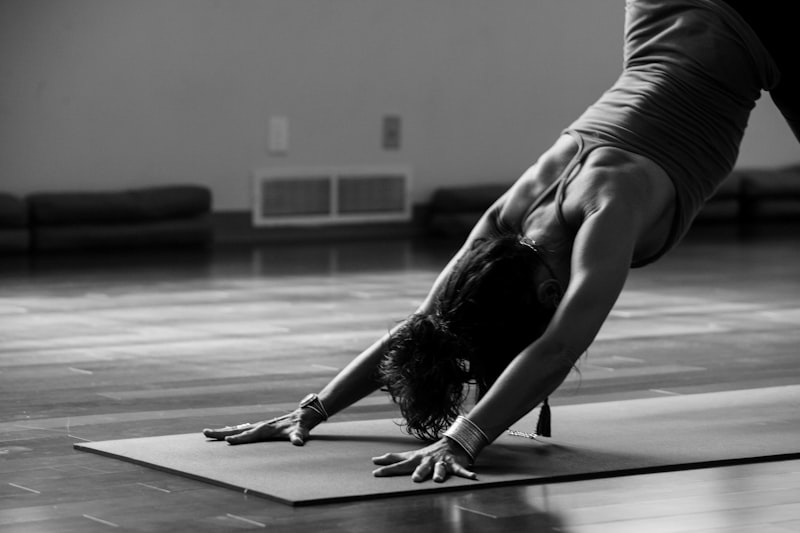
Yoga usually includes more breath awareness, stillness, and rest, which tends to create a stronger calming effect.
Pilates can be mentally centering too, but it often feels more like training than downshifting.
If your main goal is regulation, grounding, and sleep support, yoga usually wins. If your main goal is feeling stable, strong, and aligned, Pilates is a great pick.
Which is better for weight loss?
Neither Pilates nor yoga is a fat loss program by itself. If you compare pilates and yoga for physique goals, the biggest factor is consistency.
- Faster-paced yoga can feel cardio-ish.
- Pilates builds muscular endurance and posture (which changes how you look and move).
The best one is the one you'll do 3–4 times a week without quitting.
What beginners should expect in a first class
Pilates: Lots of cueing about ribs, pelvis, breath, and control. Slower pace but deep effort. Common feeling: shaking core (normal).
Yoga: More variety (standing, balance, folds, twists depending on style). Props help a lot. Common feeling: "I didn't know I was this tight" (also normal).
When you compare pilates and yoga for beginner-friendliness, both can be accessible if the class is truly beginner-level and the teacher offers modifications. Our online yoga classes Philippines include gentle and all-levels options.
Who should choose Pilates?
Pilates might fit you best if you:
- Want structured strength without heavy weights
- Want posture and core stability
- Like precision and repeatable progress
- Need "support" more than deep stretching
Who should choose Yoga?
Yoga might fit you best if you:
- Want mobility and flexibility alongside strength
- Want stress relief and nervous system support
- Want a practice that reaches beyond the mat
- Prefer variety across class styles
The best option for most people: combine them
If you're trying to compare pilates and yoga because you feel like you must pick one forever, you don't.
A simple combo that works well for many bodies:
- 2 days yoga (mobility + downshift)
- 1–2 days Pilates (core + posture support)
- Optional: one extra easy walk day
Pilates can make yoga feel more stable. Yoga can make Pilates feel more spacious.
Want help building a simple weekly plan?
If you want to compare pilates and yoga through your own body (not through internet opinions), email us and we'll help you create a realistic weekly plan.
What to include in your email:
- Your main goal (back pain, posture, stress, strength, flexibility, weight loss, or "I sit too much")
- How many days per week you can commit
- Any injuries/limitations
- What you currently do for movement (even if it's "none")
Why a plan helps (the science part): Both yoga and Pilates show evidence of supporting pain and function in low back pain populations, but results depend on the right "dose," progression, and appropriate modifications. Pilates shows improvements in pain and disability in systematic review evidence, and yoga shows small to moderate improvements for chronic non-specific low back pain in systematic reviews.
Key takeaways
- When you compare pilates and yoga, Pilates is more conditioning-focused (core, stability, posture), while yoga is a mind-body and spiritual path that includes ethics, philosophy, and meditation.
- Pilates tends to feel more structured and strength-driven.
- Yoga tends to offer bigger flexibility gains and stronger relaxation effects.
- For many people, the best answer is both: Pilates for support, yoga for space.
More from the blog
Related reads: Yin vs Restorative Yoga, Yoga for Back Pain, Yoga for Stress Relief Philippines, Vinyasa Yoga Benefits and Tips.
Try yoga with us
Join our live online yoga classes Philippines—gentle, vinyasa, and therapeutic-style options with modifications for every body.