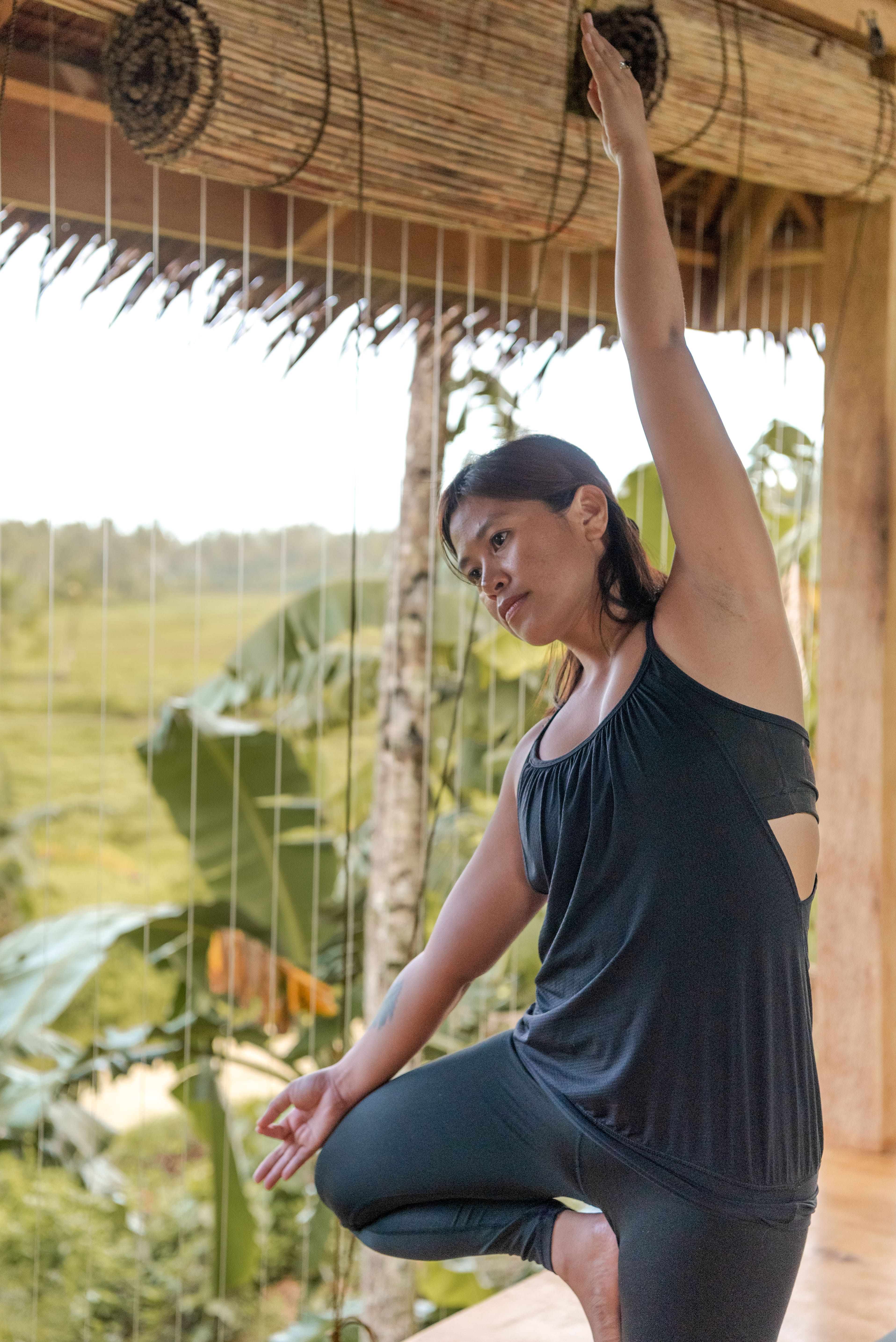
Yoga Teacher Training
Philippines
A complete guide to choosing yoga teacher training in the Philippines—what to expect, how to choose, and how to begin. Next online cohort: October 17 – December 6, 2026.
Whether you dream of teaching yoga professionally or simply want to deepen your own practice, choosing the right yoga teacher training is one of the most meaningful decisions you’ll make.
There are now many yoga schools in the Philippines offering 200-hour yoga teacher training programs. Some focus on physical practice, while others emphasize philosophy, anatomy, meditation, or lifestyle. With so many options, it can be difficult to know where to begin.
This guide was created to help you make an informed decision.
You’ll learn what a yoga teacher training really involves, who it’s for, what you’ll study, how much it typically costs in the Philippines, whether Yoga Alliance registration matters, and how to choose a school that supports both your growth as a practitioner and your development as a teacher.
I’ve been practicing yoga since 2012 and teaching since 2018. Over the years, I’ve studied in India, assisted in multiple 200-hour Yoga Teacher Trainings, and taught students with different bodies, goals, and life experiences. If there’s one thing I’ve learned, it’s that good teacher training isn’t about creating perfect yoga teachers. It’s about helping people become curious students, thoughtful teachers, and lifelong practitioners.
You’ll notice that this guide doesn’t promise that a yoga teacher training will transform your life. I don’t believe transformation comes from a certificate or even from the training itself. A teacher training offers knowledge, practices, guidance, and a supportive community. What transforms us is how consistently we show up, how willing we are to question old habits, and how open we are to learning from both our teachers and our own experience.
Whether you choose Upekkha Yoga School or another program, my hope is that this guide helps you ask better questions, understand what truly matters in a yoga teacher training, and find a school that feels aligned with your values and your path.
What You’ll Learn in This Guide
- What a 200-hour Yoga Teacher Training is
- Whether beginners can join
- Why people choose to take a yoga teacher training
- How to choose the right yoga school in the Philippines
- What you’ll learn during training
- Whether Yoga Alliance registration is important
- The difference between online and in-person training
- Typical tuition fees and what they include
- Frequently asked questions about yoga teacher training
What Is a Yoga Teacher Training?
A Yoga Teacher Training (YTT) is an immersive course designed to deepen your understanding of yoga and prepare you to share it with others. While many people join with the goal of becoming a certified yoga teacher, others enroll simply because they want to explore yoga beyond the physical practice.
If your experience of yoga has mostly been following classes at a studio or online, a teacher training offers the opportunity to step behind the scenes. Instead of asking, "What pose comes next?" you’ll begin asking, "Why do we practice this posture? What purpose does it serve? How can I adapt it for different bodies? What is the intention behind this sequence?"
You learn not only what to teach but how to observe, communicate, support, and continue learning long after the training ends.
A well-rounded 200-hour Yoga Teacher Training typically includes:
Asana (Posture)
You’ll study foundational yoga postures in greater depth than you would in a regular class. Rather than memorizing shapes, you’ll explore alignment principles, common variations, modifications, contraindications, and the purpose of each pose. You’ll also begin developing the ability to observe different bodies and offer options that support steadiness and ease.
Pranayama (Breathwork)
Breath is one of yoga’s most powerful tools. During your training, you’ll learn traditional breathing practices, understand when to use them, and experience how they influence the nervous system, energy, focus, and emotional well-being.
Meditation
Meditation becomes more than something you occasionally try at the end of class. You’ll develop a personal practice while learning different approaches that can support concentration, self-awareness, and inner steadiness.
Yoga Philosophy
Yoga is far more than movement. You’ll be introduced to foundational texts such as the Yoga Sutras of Patanjali, the Bhagavad Gita, and the Hatha Yoga Pradipika. Rather than treating philosophy as ancient ideas to memorize, a good teacher training helps you explore how these teachings remain relevant in everyday life.
Anatomy and Physiology
Understanding the body helps us teach with greater confidence and care. You’ll learn how muscles, joints, and movement patterns influence yoga practice, while recognizing that every body is unique. Anatomy is not about forcing everyone into the same shape but about making informed decisions that support safe and sustainable practice.
Teaching Methodology
For many students, this becomes one of the most rewarding parts of the training.
Teaching methodology is where you begin learning how to communicate clearly, structure a class, offer effective verbal cues, observe students, adapt practices for different needs, and create a welcoming learning environment.
At Upekkha Yoga School, this is an area we place particular emphasis on. My background is not only in yoga but also in education. I believe learning to teach yoga begins with understanding how people learn. Rather than encouraging you to imitate another teacher, we’ll help you develop your own authentic voice while learning to meet students where they are.
Practice Teaching
One of the biggest misconceptions about yoga teacher training is that you’ll graduate after simply attending lectures.
In reality, teaching is something you learn by teaching.
Throughout your training, you’ll practice guiding classmates, receive constructive feedback, observe others, reflect on your own teaching, and gradually build the confidence to lead a complete class. Like any skill, teaching develops through repetition, curiosity, and refinement.
More Than a Certification
Although a 200-hour Yoga Teacher Training qualifies you to register with Yoga Alliance if you complete training at a Registered Yoga School, I encourage prospective students not to choose a program based solely on certification.
The letters after your name don’t determine what kind of teacher you’ll become.
Your curiosity does.
Your consistency does.
Your willingness to keep learning does.
A certificate marks the completion of a course. Becoming a thoughtful, compassionate, and skilled teacher is a lifelong practice.
That’s one of the reasons many graduates say their teacher training wasn’t an ending but the beginning of a much deeper relationship with yoga.
Can Beginners Join a Yoga Teacher Training?
One of the questions I hear most often is:
- "Do I need to be advanced at yoga before I can join a teacher training?"
The short answer is no.
In fact, many people who enroll in a 200-hour Yoga Teacher Training don’t initially plan to become yoga teachers. Some join because they want to deepen their practice, understand the philosophy behind yoga, improve their confidence, or simply spend time immersed in something meaningful.
Being able to do an arm balance or an advanced backbend is not what makes someone ready for a teacher training.
What’s more important is curiosity, commitment, and a willingness to learn.
What Does "Beginner" Really Mean?
The word beginner can mean different things.
Someone may have practiced yoga once a week for five years but never explored breathwork, meditation, or philosophy.
Another person may have practiced consistently for only a year but has developed a regular home practice, asks thoughtful questions, and enjoys learning.
A yoga teacher training isn’t a reward reserved for the most flexible or experienced practitioners. It’s a learning environment designed to help you grow, wherever you’re starting from.
Signs You May Be Ready for a Yoga Teacher Training
You don’t need to check every box below, but these are common signs that you’re ready to take the next step:
- You have a regular yoga practice, even if it’s simple.
- You’re curious about the philosophy behind yoga, not just the physical postures.
- You enjoy learning and are open to feedback.
- You’re willing to practice consistently outside of scheduled classes.
- You want to understand how to adapt yoga for different bodies and needs.
- You feel called to explore yoga more deeply, whether or not you plan to teach.
Notice that flexibility isn’t on this list.
Neither is mastering difficult poses.
You Don’t Need to Know Everything
Some prospective students worry that everyone else in the training will be more experienced.
In reality, every group is made up of people with different backgrounds.
Some have practiced for years.
Some are healthcare professionals.
Some are school teachers.
Some are athletes.
Some are retirees looking for a new chapter.
Some simply want to understand themselves better.
One of the strengths of a good teacher training is learning alongside people with different perspectives and experiences. Those conversations often become just as valuable as the formal curriculum.
Should You Practice Before Enrolling?
If you’re completely new to yoga, I usually recommend spending some time developing a consistent practice before joining a teacher training.
Not because you need to become "good" at yoga, but because familiarity with the basics allows you to get more from the experience.
Rather than focusing on achieving advanced poses, spend time becoming familiar with:
- Foundational standing postures
- Seated postures
- Basic breath awareness
- Relaxation
- A sustainable home practice
The more comfortable you are as a student, the easier it becomes to understand the experience from your future students’ perspective.
A Teacher Training Is Not the Finish Line
Many people think they need to become "good enough" before they apply.
The irony is that a teacher training exists because none of us know everything.
Whether you’ve been practicing for one year or ten, the mindset that serves you best is not perfection but curiosity.
In yoga, we call this svādhyāya, or self-study.
A teacher training isn’t about proving that you’re already an expert. It’s an invitation to observe yourself more closely, question what you think you know, and remain open to learning.
The best teachers I’ve met aren’t the ones who know all the answers.
They’re the ones who continue asking thoughtful questions.
Why Take a Yoga Teacher Training?
People often assume a Yoga Teacher Training is only for those who want to teach.
In my experience, that’s rarely the whole story.
Some students arrive with a clear goal of teaching yoga professionally. Others simply feel a quiet curiosity. They want to understand yoga beyond the weekly class, reconnect with themselves, or explore a practice that has already become meaningful in their lives.
Both reasons are equally valid.
A Yoga Teacher Training isn’t just about learning to guide others. It’s also an opportunity to become a more attentive student of yourself.
Deepen Your Personal Practice
Most regular yoga classes focus on the experience of practicing.
A teacher training invites you to understand why you’re practicing.
You’ll begin exploring the purpose behind postures, breathing techniques, meditation, and philosophy. Instead of following instructions, you’ll learn to ask thoughtful questions.
Why do certain poses feel accessible while others don’t?
How does the breath influence the mind?
How can yoga support us through periods of stress, change, or uncertainty?
This deeper understanding often transforms the way you approach your own practice. Yoga becomes less about achieving poses and more about cultivating awareness.
Learn the Philosophy Behind the Practice
Many people first discover yoga through movement.
Over time, they become curious about the ideas that have supported the practice for thousands of years.
A Yoga Teacher Training introduces foundational teachings such as the Yoga Sutras, the Bhagavad Gita, and other classical texts. These teachings aren’t presented as beliefs you must adopt but as invitations to reflect.
One concept that many students find meaningful is abhyāsa (consistent practice).
In the Yoga Sutras, Patanjali reminds us that meaningful progress doesn’t come from occasional bursts of effort but from practice that is steady, sincere, and sustained over time.
That lesson extends far beyond yoga.
It applies to relationships, careers, creativity, and personal growth.
Develop Confidence
Standing in front of a room and teaching yoga can feel intimidating.
Yet confidence doesn’t usually appear before we begin.
It grows through experience.
As you practice teaching, receive feedback, and support your fellow trainees, you’ll gradually become more comfortable communicating, observing, and trusting your own voice.
Many graduates discover that this confidence extends into other areas of life as well.
Whether speaking at work, leading a meeting, or having difficult conversations, learning to guide a yoga class often helps people become calmer and more present in everyday interactions.
Join a Community of Like-Minded People
One of the most unexpected gifts of a teacher training is the community that forms along the way.
You’ll spend weeks or months learning, practicing, reflecting, and growing alongside people from different backgrounds.
Some may become lifelong friends.
Others may simply become companions for a meaningful chapter of your life.
Yoga reminds us that while practice is deeply personal, we don’t have to walk the path alone.
Learn to Serve Others
Not everyone who completes a Yoga Teacher Training becomes a full-time yoga teacher.
Some teach one class each week.
Some offer yoga within schools, workplaces, or healthcare settings.
Others never teach publicly at all.
Yet learning how to hold space for another person is valuable regardless of how often you teach.
You’ll begin developing qualities such as patience, empathy, observation, clear communication, and compassionate leadership. These skills are just as relevant in parenting, healthcare, education, business, and community work as they are in a yoga studio.
Teaching Is a Practice of Humility
People sometimes imagine that becoming a yoga teacher means becoming an expert.
In reality, teaching often reminds us how much there is still to learn.
Every student brings different experiences, bodies, goals, strengths, and challenges. No single sequence, cue, or teaching style will serve everyone equally.
The practice of teaching asks us to remain curious.
To listen before speaking.
To observe before correcting.
To continue learning long after graduation.
In many ways, a Yoga Teacher Training doesn’t teach you how to have all the answers.
It teaches you how to ask better questions.
More Than a Career
If your goal is to teach yoga professionally, a teacher training provides the knowledge and practical experience to begin that journey.
If your goal is personal growth, you’ll likely discover that the experience offers something equally valuable.
Yoga teacher training isn’t simply about earning a certificate.
It’s about developing a relationship with a practice that continues to evolve throughout your life.
As the yogic principle of svādhyāya (self-study) reminds us, the greatest teacher we encounter is often our own experience.
A teacher training doesn’t complete that journey.
It simply gives us a place to begin with greater clarity, intention, and support.
How to Choose the Right Yoga Teacher Training in the Philippines
There isn’t one "best" Yoga Teacher Training in the Philippines.
There is only the training that is best for you.
Every yoga school has its own teaching style, philosophy, community, and strengths. Some focus on traditional Hatha Yoga. Others emphasize Vinyasa, anatomy, spirituality, or personal transformation. Some are intensive residential programs, while others are designed for working professionals.
Rather than asking, "Which school is the best?", I encourage prospective students to ask a different question:
- "Which school is the best fit for where I am in my journey?"
In yoga philosophy, there’s the concept of viveka (discernment)—the ability to see clearly and make wise decisions. Choosing a teacher training is an opportunity to practice that discernment.
Here are the questions I would ask before enrolling in any program.
1. Why Do You Want to Join?
This is the most important question, and it’s often the one people spend the least time answering.
Are you hoping to:
- Teach yoga professionally?
- Deepen your personal practice?
- Learn more about philosophy?
- Improve your confidence?
- Explore a career change?
- Take time for personal reflection?
Your reasons will influence what kind of training is right for you.
If your goal is to teach, you may want a program with plenty of practice teaching and mentorship.
If your goal is personal growth, you might value smaller class sizes, opportunities for reflection, and a balanced curriculum.
There isn’t a right or wrong reason to join. The clearer you are about your intention, the easier it becomes to choose a school that supports it.
2. Who Are Your Teachers?
A beautiful studio and professional website can make a strong first impression.
Your teachers will shape the experience far more than the location.
Ask yourself:
- What is their teaching experience?
- Do they continue studying?
- Have they taught students with different backgrounds and abilities?
- Can they explain concepts clearly?
- Do they encourage questions?
- Do they embody the values they teach?
Knowledge matters.
Experience matters.
Character matters too.
The most memorable teachers aren’t necessarily the ones who know the most. They’re the ones who help students feel safe enough to learn.
3. Look Beyond the Curriculum
Most 200-hour Yoga Teacher Trainings cover similar topics because they follow broad educational standards.
Don’t stop at the module titles.
Look more closely.
How are those topics taught?
Will you mostly listen to lectures?
Will you practice teaching?
Will you receive feedback?
Will there be opportunities for discussion, reflection, and asking questions?
A curriculum isn’t just what is taught.
It’s how learning happens.
4. How Much Practice Teaching Is Included?
Teaching yoga is a practical skill.
Reading about teaching isn’t the same as standing in front of a class.
A strong teacher training should give you multiple opportunities to:
- Teach short sequences
- Receive supportive feedback
- Observe other trainees
- Reflect on your teaching
- Practice again
Learning happens through experience, not perfection.
The more opportunities you have to teach during your training, the more confident you’ll feel after graduation.
5. Does the School Support Different Bodies and Different Learners?
Every student is different.
Every future yoga teacher is different too.
A good training recognizes that there isn’t only one way to learn, move, or teach.
Ask whether the program encourages adaptation rather than rigid perfection.
Can poses be modified?
Are different body types respected?
Are questions welcomed?
Does the teaching acknowledge that students have different learning styles, experiences, and goals?
The best teachers don’t try to make every student the same.
They learn to meet each person where they are.
6. Is Philosophy Integrated Into Everyday Practice?
Yoga philosophy shouldn’t exist only in a textbook.
It should influence how the training is taught.
Notice whether the values discussed in class are reflected in the learning environment.
Are students encouraged to support one another rather than compete?
Do teachers demonstrate humility?
Is there space for reflection?
Do discussions invite curiosity instead of giving fixed answers?
A school’s culture often teaches just as much as its curriculum.
7. What Happens After Graduation?
Graduation isn’t the end of your learning.
Ask what support continues afterward.
For example:
- Alumni community
- Continuing education
- Mentorship
- Practice teaching opportunities
- Workshops
- Resources for new teachers
The best schools see graduation as the beginning of a lifelong relationship with yoga.
8. Don’t Choose Based on Price Alone
Teacher training is a significant investment.
It’s natural to compare tuition fees.
But the least expensive program isn’t always the best value, and the most expensive isn’t automatically the highest quality.
Instead of asking,
"Which training costs the least?"
consider asking,
"Which training offers the greatest opportunity for learning, growth, and long-term support?"
The answer may be different for every student.
9. Trust Your Intuition
After you’ve compared curriculums, spoken with teachers, read reviews, and asked practical questions, there’s one final thing to consider.
How do you feel?
Do you feel welcomed?
Do you feel respected?
Do you feel inspired?
Do you feel pressured?
Yoga encourages us to cultivate awareness not only of the mind but also of the quiet wisdom that arises when we pause and listen.
Gather information.
Ask thoughtful questions.
Practice viveka (discernment).
Then trust yourself to choose the path that feels aligned.
The right teacher training won’t promise to make you into someone else.
It will support you in becoming more fully yourself.
Is Yoga Alliance Important?
One of the most common questions prospective students ask is whether they need to choose a Yoga Alliance Registered Yoga School (RYS).
The short answer is:
It depends on your goals.
Yoga Alliance is one of the world’s largest voluntary organizations for yoga schools and teachers. It establishes educational standards for Registered Yoga Schools (RYS) and allows graduates to register as Registered Yoga Teachers (RYT) after completing an eligible training.
For many students, Yoga Alliance registration provides confidence that a school follows internationally recognized training standards.
However, it’s important to understand what Yoga Alliance does—and what it doesn’t do.
What Is a Registered Yoga School (RYS)?
A Registered Yoga School (RYS) is a school that has chosen to register its curriculum with Yoga Alliance and meets its educational requirements.
To maintain registration, schools must teach specific categories of content, including:
- Techniques, Training, and Practice
- Anatomy and Physiology
- Yoga Humanities, including philosophy and ethics
- Professional Essentials, such as teaching methodology and professional development
These standards create consistency across registered schools while still allowing each school to develop its own teaching philosophy and curriculum.
What Is a Registered Yoga Teacher (RYT)?
After graduating from an eligible Registered Yoga School, students may choose to register individually with Yoga Alliance.
The most common designation is:
RYT 200 (Registered Yoga Teacher 200-Hour)
This indicates that the teacher has completed a 200-hour teacher training at a Registered Yoga School and has registered with Yoga Alliance.
It’s worth noting that registration is optional. Completing a teacher training does not automatically register you with Yoga Alliance.
Do You Need a Yoga Alliance Certification to Teach?
Not always.
Many yoga studios in the Philippines and around the world prefer or require Yoga Alliance credentials, especially if they receive applications from many teachers.
Others focus more on your teaching ability, communication skills, experience, professionalism, and how well you connect with students.
If you hope to teach internationally, Yoga Alliance registration may open more opportunities because it is widely recognized.
If you primarily plan to teach within your local community, what matters most may be the quality of your training and your continued commitment to learning.
What Employers Really Look For
While certification is often the first qualification employers notice, it rarely determines whether someone becomes an exceptional teacher.
Studio owners frequently look for qualities such as:
- Clear communication
- Professionalism
- Reliability
- A consistent personal practice
- Strong observation skills
The ability to adapt classes for different students
Humility and a willingness to keep learning
A certificate may help you get an interview.
Your teaching is what earns students’ trust.
Questions to Ask Beyond Yoga Alliance
Whether or not a school is registered, consider asking:
- How much practice teaching is included?
- How much feedback will I receive?
- Who are the lead teachers, and what is their experience?
- How large are the training groups?
- How is anatomy taught?
- Is philosophy integrated into the program or taught as a separate subject?
- What support is available after graduation?
- Does the school’s teaching philosophy resonate with me?
These questions often tell you more about the quality of a training than a logo on a website.
Our Perspective
At Upekkha Yoga School, we believe educational standards matter.
Yoga Alliance provides a valuable framework that helps create consistency across teacher trainings, and we support those standards.
At the same time, we believe that becoming a thoughtful yoga teacher involves more than meeting minimum requirements.
A meaningful teacher training develops not only knowledge but also discernment, compassion, communication, and the confidence to keep learning long after graduation.
Yoga Alliance registration is an important milestone.
It is not the destination.
The destination—if yoga has one—is a lifelong practice of learning, self-study, and service.
How Much Does Yoga Teacher Training Cost in the Philippines?
Investing in a Yoga Teacher Training is a significant decision.
Like any meaningful education, it requires not only time and commitment but also a financial investment. As you begin researching different programs, you’ll quickly notice that tuition fees can vary considerably.
You might wonder why one training costs ₱30,000 while another costs more than ₱150,000.
The answer isn’t always straightforward.
Price alone doesn’t tell you the quality of a training. Likewise, the most expensive program isn’t automatically the best fit for every student.
Instead of asking, "Which Yoga Teacher Training is the cheapest?", a more helpful question might be:
- "What kind of learning experience am I investing in?"
How Much Does a Yoga Teacher Training Typically Cost?
In the Philippines, a 200-hour Yoga Teacher Training generally ranges from ₱35,000 to ₱150,000 or more, depending on the format, location, duration, and what is included.
Programs at the lower end of the range are often online or weekend-based and may include tuition only.
Residential or retreat-style trainings typically cost more because they may also include accommodation, meals, manuals, and use of the training facilities.
International guest teachers, smaller class sizes, and extended mentorship may also influence the price.
Rather than comparing tuition alone, take time to understand what you’re actually receiving.
What Is Usually Included?
Every school structures its program differently, but a teacher training may include:
- Comprehensive training manual or workbook
- Guided asana, pranayama, and meditation practices
- Anatomy and philosophy classes
- Practice teaching and feedback sessions
- Assessments and certification
- Ongoing mentorship during the training
- Access to recorded classes or online resources
- Accommodation and meals for residential programs
- Alumni community or continuing education opportunities
Some schools include everything in the tuition fee, while others charge separately for manuals, accommodation, or certification.
Before enrolling, ask for a detailed breakdown so you know exactly what your investment covers.
Why Do Prices Vary So Much?
There are many factors that influence the cost of a Yoga Teacher Training.
Some programs keep costs lower by offering larger groups or online learning.
Others intentionally limit the number of trainees to create a more personal learning experience.
The location, duration, faculty, accommodation, and ongoing support all contribute to the overall cost.
More importantly, every school has a different educational philosophy.
Some focus on delivering information efficiently.
Others prioritize mentorship, discussion, reflection, and repeated opportunities to practice teaching.
Neither approach is inherently better. What matters is finding a learning environment that supports the way you learn best.
Questions Worth Asking Before You Enroll
Before comparing prices, consider asking these questions:
- What is included in the tuition fee?
- How many hours of practice teaching will I receive?
- How large is each training cohort?
- Will I receive individual feedback?
- Are there additional costs after enrollment?
- Is there support after graduation?
- What opportunities are there for continued learning?
Sometimes a slightly higher investment provides significantly more guidance, mentorship, and confidence by the time you graduate.
Think Beyond the Certificate
It’s understandable to think about return on investment.
If your goal is to teach professionally, your training is the foundation of your future work.
If your goal is personal growth, you’re investing in skills, relationships, and experiences that may continue shaping your life long after the training ends.
Some of the most valuable things you’ll gain cannot be measured in pesos.
The confidence to stand in front of a room.
A deeper understanding of yourself.
Friendships formed through shared practice.
A steadier relationship with your breath.
A community that continues to support your growth.
These are difficult to place a price on, yet many graduates describe them as the most meaningful part of their journey.
Choose Value, Not Just Price
A Yoga Teacher Training is not a purchase you’ll make every year.
Take your time.
Ask questions.
Compare programs thoughtfully.
Consider what you’re receiving, who you’ll be learning from, and how the experience aligns with your goals.
In yoga, we often return to the practice of aparigraha (non-grasping)—letting go of the tendency to cling too tightly, whether to possessions, expectations, or even the lowest price.
Choosing a teacher training isn’t about finding the cheapest option or the most expensive one.
It’s about finding the place where you believe you’ll learn, grow, and be supported with steadiness, curiosity, and care.
That is where the real value lies.
Online vs In-Person Yoga Teacher Training
One of the biggest decisions you’ll make isn’t just which Yoga Teacher Training to join.
It’s how you want to learn.
In recent years, online Yoga Teacher Trainings have become increasingly accessible, allowing students to study from anywhere in the world. At the same time, many people continue to value the immersive experience of learning together in the same physical space.
So which one is better?
Like many questions in yoga, the answer is:
It depends.
Rather than asking which format is superior, consider which one best supports your current stage of life, learning style, and personal circumstances.
Online Yoga Teacher Training
Online learning has made yoga education accessible to people who may not otherwise be able to attend a training.
Perhaps you work full-time.
Perhaps you live far from a yoga school.
Perhaps you have family responsibilities or health considerations that make extended travel difficult.
For many students, online learning removes barriers that once made a teacher training impossible.
Benefits of Online Yoga Teacher Training
- Learn from anywhere in the Philippines or around the world.
- Continue working while studying.
- Save on travel and accommodation costs.
- Review recorded sessions, if available.
- Learn in the comfort of your own home.
- Build a sustainable practice within your everyday life.
Many students are surprised by how connected they feel to their classmates, even through a screen. Thoughtfully designed online programs create space for discussion, practice teaching, and meaningful relationships despite the distance.
Challenges of Online Learning
Online learning also requires greater self-discipline.
Without the structure of being physically present each day, you’ll need to create your own learning environment and maintain consistent practice.
You may also miss some of the informal conversations and shared experiences that naturally happen during breaks, meals, and practice together.
For students who thrive on routine and independent learning, these challenges are often manageable.
For others, learning in person may provide more support.
In-Person Yoga Teacher Training
There is something special about practicing, learning, and sharing space with others each day.
The rhythm of waking together, practicing together, eating together, and reflecting together creates an immersive environment that’s difficult to replicate online.
Many students describe an in-person teacher training as stepping away from everyday distractions and dedicating themselves fully to learning.
Benefits of In-Person Yoga Teacher Training
- Immediate feedback from teachers.
- Hands-on learning and observation.
- Shared practice with classmates.
- A deeply immersive learning environment.
- Fewer distractions from daily life.
- Opportunities for spontaneous conversations and community building.
- For many people, these relationships become one of the most meaningful parts of the experience.
Challenges of In-Person Learning
Attending an in-person training often requires taking time away from work, family, or other responsibilities.
There may also be additional costs for travel, accommodation, and meals.
While immersion can be deeply rewarding, it isn’t practical for everyone.
And that’s okay.
Choosing an online program because it better fits your life doesn’t make your learning any less meaningful.
A Side-by-Side Comparison
| Online Yoga Teacher Training | In-Person Yoga Teacher Training |
|---|---|
| Flexible schedule | Immersive daily experience |
| Study from anywhere | Learn in a dedicated space |
| Lower travel costs | Face-to-face interaction |
| Easier to balance with work and family | Immediate feedback during practice |
| Often includes recorded sessions | Rich community experience |
| Requires more self-direction | Greater external structure |
Neither format is inherently better.
Each offers different strengths.
Which Format Is Right for You?
An online Yoga Teacher Training may be a good fit if you:
- Have work or family commitments.
- Live far from a training center.
- Prefer learning at your own pace.
- Are comfortable using technology.
- Have an established home practice.
An in-person Yoga Teacher Training may be a better fit if you:
- Learn best through direct interaction.
- Want a fully immersive experience.
- Enjoy practicing within a community.
- Appreciate immediate feedback.
- Can dedicate uninterrupted time to your studies.
Of course, many students find that a hybrid approach offers the best of both worlds.
Learning Depends on More Than the Format
It’s easy to assume that learning happens because of the environment.
In reality, learning happens because of engagement.
A thoughtful online training can be more meaningful than an uninspiring in-person program.
Likewise, an excellent residential training can provide experiences that are difficult to recreate online.
The format matters.
But the quality of the teaching, the opportunities to practice, the feedback you receive, and your own commitment to learning matter even more.
As the yogic principle of abhyāsa (consistent practice) reminds us, progress comes not from where we practice but from returning to the practice with sincerity and steadiness.
Whether you choose to learn online or in person, the question remains the same:
- Will this environment support me in becoming the student—and perhaps the teacher—I hope to become?
What Makes a Good Yoga School?
There are many excellent Yoga Teacher Training programs in the Philippines and around the world.
Each has its own teachers, curriculum, community, and approach to learning.
Rather than asking, "Which yoga school is the best?", I encourage you to ask a different question:
- "Which yoga school is the best fit for the kind of teacher—and person—I hope to become?"
In yoga, we practice viveka (discernment), the ability to see clearly and make thoughtful decisions.
Discernment begins with asking good questions.
It also asks us to practice satya (truthfulness)—looking beyond beautiful photos, persuasive marketing, and impressive credentials to understand what a school is truly offering.
Here are some of the qualities I believe are worth looking for in any Yoga Teacher Training, regardless of where you choose to study.
Experienced Teachers Who Continue to Learn
Experience matters.
But years of teaching alone don’t necessarily make someone an effective teacher.
Look for teachers who continue to study, remain curious, and are willing to say, "I don’t know."
The best educators I’ve met don’t pretend to have every answer.
Instead, they model what lifelong learning looks like.
Notice how your teachers speak about their own teachers, their ongoing education, and the questions they’re still exploring.
A teacher who remains a student often creates students who become thoughtful teachers.
A Curriculum That Goes Beyond Memorization
A good curriculum teaches more than information.
It helps you understand relationships.
How anatomy informs movement.
How philosophy influences the way we teach.
How breath affects attention.
How sequencing supports a particular intention.
Instead of simply asking for a list of modules, ask how those modules connect.
A meaningful Yoga Teacher Training helps you integrate knowledge rather than collecting disconnected facts.
Plenty of Practice Teaching
Teaching is a practical skill.
Like learning an instrument or a language, confidence develops through practice.
Ask how often you’ll teach during the program.
Will you receive constructive feedback?
Will you have opportunities to teach different types of students?
Will you be encouraged to reflect and try again?
The more opportunities you have to practice during your training, the more prepared you’ll feel after graduation.
Teachers Who Offer Mentorship, Not Just Lectures
Some of the most meaningful learning happens outside formal presentations.
It happens during conversations.
Questions.
Feedback.
Reflection.
Mentorship creates space for growth that lectures alone cannot provide.
Ask yourself:
- Will I simply attend classes?
- Or will I be supported throughout my learning journey?
A Balanced Approach to Anatomy and Philosophy
Yoga is both a physical and contemplative practice.
A strong teacher training recognizes the value of both.
If a program focuses only on movement, you may miss the depth of yoga’s philosophical traditions.
If it focuses only on theory, you may feel unprepared to teach real people with different bodies and needs.
Look for a curriculum that brings these areas together instead of treating them as separate worlds.
Student Support
Every student learns differently.
Some understand best by reading.
Others through discussion.
Others by practicing.
Others by teaching.
A supportive learning environment recognizes these differences and creates space for questions, mistakes, and continued growth.
Notice how the school responds when prospective students ask questions.
The way you’re treated before you enroll often reflects how you’ll be supported during the training.
Class Size
There isn’t one perfect class size.
Smaller groups often allow for more individual feedback and closer relationships with teachers.
Larger groups may offer greater diversity of perspectives and a wider community.
Rather than focusing on numbers alone, ask:
- How much individual guidance will I receive?
- Will my teachers know my name?
- Will they have time to observe my teaching and offer meaningful feedback?
Sometimes these questions matter more than the size of the cohort itself.
A Community That Reflects Yogic Values
Every yoga school teaches through its curriculum.
It also teaches through its culture.
Notice how students interact with one another.
Do they encourage each other?
Do teachers model respect and humility?
Are different bodies, backgrounds, and experiences welcomed?
Do you feel inspired—or intimidated?
The learning environment shapes your experience just as much as the syllabus.
Questions Are Welcomed
One of my favorite moments in any training is when a student says,
"I’ve always wondered about this..."
Those questions often lead to the richest discussions.
A healthy learning environment doesn’t expect students to know everything.
It encourages curiosity.
It welcomes respectful disagreement.
It recognizes that learning often begins with uncertainty.
If you don’t feel comfortable asking questions before you enroll, consider how you might feel asking them during the training.
Trust Your Experience
As you research different schools, gather information.
Read the curriculum.
Attend an information session.
Speak with graduates.
Ask difficult questions.
Compare thoughtfully.
Then pause.
Beyond the brochures, websites, and social media posts, ask yourself:
Where did I feel most welcomed?
Which teachers made me curious to keep learning?
Which school’s values resonate with my own?
Can I imagine becoming part of this community?
Facts matter.
Accreditation matters.
Curriculum matters.
But so does the feeling that you’ve found a place where you’ll be supported, challenged, and encouraged to grow.
A good Yoga Teacher Training doesn’t simply prepare you to teach yoga.
It creates the conditions for you to remain a lifelong student.
And in my experience, that’s one of the greatest gifts any school can offer.
Why We Teach the Way We Do
Every yoga teacher remembers someone who shaped the way they practice.
Perhaps it was a teacher who explained a posture in a way that suddenly made sense.
Perhaps it was someone who listened without judgment.
Or perhaps it was simply someone who created a space where you felt safe enough to ask questions, make mistakes, and grow.
When I began teaching, I naturally focused on what I had learned—postures, sequencing, anatomy, philosophy, breathwork.
Over time, however, another question became more important.
How do people actually learn?
That question continues to shape everything we do at Upekkha Yoga School.
We Teach People, Not Just Yoga
Yoga isn’t practiced by ideal bodies.
It isn’t practiced by perfect students.
It is practiced by people.
People with different experiences.
Different strengths.
Different fears.
Different reasons for showing up.
Because every student is different, we don’t believe there is only one "right" way to teach.
A cue that helps one student may confuse another.
A posture that feels nourishing for one body may not be appropriate for someone else.
A teaching style that inspires one class may not resonate with another.
Our goal isn’t to produce teachers who all sound the same.
It’s to help each student develop the knowledge, confidence, and discernment to respond to the people in front of them.
Learning Before Teaching
One of the ideas I often return to is this:
Before we can teach well, we must learn well.
That means becoming curious.
Observing carefully.
Listening deeply.
Asking thoughtful questions.
Reflecting on our experiences.
These qualities are just as important as learning anatomy or sequencing.
Because teaching isn’t simply sharing information.
It’s helping another person learn.
A Learner-Centered Approach
My background is not only in yoga but also in education.
That has profoundly influenced the way I teach.
Rather than asking,
"How can I cover all the material?"
I find myself asking,
"What will help this student understand?"
Learning doesn’t happen because information is presented.
Learning happens when students are engaged, challenged appropriately, given opportunities to practice, and encouraged to reflect.
Throughout our teacher training, we aim to create those conditions.
You’ll have opportunities to teach, receive feedback, ask questions, make mistakes, and try again.
Because confidence isn’t built by avoiding mistakes.
It’s built by learning from them.
Rooted in Sthira Sukham (Steadiness and Ease)
One of the teachings that continues to guide me comes from the Yoga Sutras:
- Sthira sukham āsanam.
- This sutra is often translated as, "A posture should be steady and comfortable."
- For me, this principle extends far beyond physical practice.
- It also describes meaningful learning.
- Learning requires sthira (steadiness).
The willingness to return to practice again and again.
To stay committed even when something feels unfamiliar.
At the same time, learning also requires sukham (ease).
Not ease as the absence of challenge, but as an environment where curiosity is valued over perfection.
Where questions are welcomed.
Where students don’t feel they have to pretend they already know everything.
When steadiness and ease exist together, people learn more deeply.
Every Student Is Also a Teacher
One of the unexpected gifts of teaching is realizing how much we learn from our students.
Each cohort brings different perspectives, professions, cultures, and life experiences.
A physiotherapist may notice something different from an artist.
A parent may understand patience in ways someone else has yet to experience.
A healthcare professional may ask questions that change the way we think about anatomy.
Teaching becomes a conversation rather than a performance.
Everyone contributes to the learning environment.
Including the teacher.
We Hope You Leave With More Than a Certificate
Certificates matter.
They acknowledge the time, effort, and commitment you’ve invested.
But they’re only one part of the journey.
Our hope is that you leave with something less tangible but even more valuable.
The confidence to continue asking questions.
The humility to keep learning.
The discernment to adapt your teaching to the student in front of you.
The courage to teach in your own authentic voice rather than copying someone else’s.
And a practice that continues to support you long after graduation.
Because if yoga has taught us anything, it’s that growth doesn’t end when a course is complete.
In many ways, that’s where it truly begins.
Meet Your Lead Teacher
My journey into yoga didn’t begin with a yoga posture.
It began with meditation.
At the time, I spent much of my life in my head. I was an overthinker, constantly caught up in thoughts, planning, analyzing, and worrying. Although I couldn’t have described it this way then, I didn’t really feel at home in myself.
Meditation was the first practice that invited me to pause.
As I continued practicing, I began to notice something unexpected. While meditation helped me become more aware of my mind, I also realized how disconnected I was from my body.
That realization led me to yoga āsana (posture).
At first, I thought I was simply learning to move differently. Over time, I discovered I was learning to inhabit my body with more attention, curiosity, and kindness.
Then something very ordinary happened.
I was washing the dishes.
Normally, it was one of those everyday chores I rushed through or quietly resented. But on that day, something shifted.
I remember feeling completely present.
The warmth of the water.
The texture of the soap.
The weight of each dish in my hands.
For a few brief moments, there was nowhere else I wanted to be.
I wasn’t thinking about what had already happened or what I needed to do next.
I was simply washing the dishes.
And strangely enough, I was enjoying it.
Looking back, I recognize that experience as a small glimpse of upekkhā (equanimity)—a quiet sense of steadiness and ease that wasn’t dependent on my circumstances. Nothing extraordinary had happened. The dishes still needed washing. My life hadn’t suddenly become perfect.
But my relationship to that moment had changed.
That simple experience stayed with me.
It reminded me that yoga isn’t something we practice only on a mat or during meditation.
It’s something we carry into the ordinary moments of our lives.
That glimpse of equanimity became one of the reasons I continued exploring every aspect of yoga: meditation, movement, breathwork, philosophy, and eventually teaching.
From Student to Teacher
In 2018, I completed my first 200-hour Yoga Teacher Training.
That experience opened a new chapter in my life.
Since then, I’ve continued my studies through advanced teacher trainings in India, spent time learning from experienced teachers, and assisted multiple 200-hour Yoga Teacher Training programs in Siargao through Bodhi Yoga Center.
Each experience deepened my understanding of yoga.
More importantly, each reminded me how much there is still to learn.
The more I studied, the less interested I became in having all the answers.
Instead, I became more interested in asking better questions.
An Educator Before Anything Else
Alongside my yoga education, my background is in teaching.
As a licensed professional teacher, I’ve always been fascinated by the learning process itself.
Why do some explanations resonate while others don’t?
How do people build confidence?
How do we create learning environments where people feel safe enough to ask questions, make mistakes, and grow?
These questions led me to explore learner-centered education, educational psychology, and teaching methodologies alongside my yoga studies.
Today, those two worlds naturally come together in the way I teach.
Learning in India
Some of the most influential moments in my journey happened while studying in India.
Being immersed in a different culture of learning reminded me that yoga is much more than a collection of postures.
It’s a lifelong practice of inquiry.
The teachings I encountered there continue to influence my work, not because I believe there is only one authentic way to practice yoga, but because they encouraged me to approach the tradition with humility, curiosity, and respect.
Those experiences also reinforced something I now share with every teacher trainee:
A certificate may mark the end of a course.
It never marks the end of learning.
What You Can Expect From Me
If we learn together, you can expect me to challenge you.
Not by asking you to perform the most advanced poses, but by inviting you to think more deeply.
I’ll encourage questions.
I’ll ask you to reflect on your own experiences.
I’ll offer feedback with honesty and kindness.
And I’ll continue learning alongside you.
I don’t expect my students to become copies of me.
In fact, I hope they don’t.
My role isn’t to create teachers who all sound the same.
My role is to help you develop the confidence, knowledge, and discernment to discover your own authentic teaching voice.
A Personal Invitation
Choosing a Yoga Teacher Training is about more than choosing a curriculum.
You’re choosing the people who will guide your learning, challenge your assumptions, and support your growth.
Take your time.
Read the curriculum.
Attend an information session.
Ask me difficult questions.
Speak with past graduates.
Whether you choose Upekkha Yoga School or another program, I hope you find teachers who continue to inspire you long after your training has ended.
Because the best teachers I’ve known have never stopped being students.
And that’s the kind of teacher I continue striving to become.
Voices From Our Students
Every Yoga Teacher Training is experienced differently.
Some students arrive hoping to teach. Others simply want to deepen their personal practice. Each brings their own questions, experiences, and aspirations.
Rather than tell you what it’s like to learn with me, I’d rather let some of my former students share their experience in their own words.
Jordan, USA
"I Felt Safe to Be Curious."
One of the things I hope every student experiences is the freedom to ask questions, make mistakes, and discover their own understanding of yoga. Jordan’s reflection reminds me that meaningful learning doesn’t happen because we already know the answers. It happens when we feel safe enough to explore.
"I had the pleasure of having Jannah as one of my instructors during my 200-hour yoga teacher training. She brings a delightful energy and a deep well of experience to her teaching. Her knowledge, combined with her genuine encouragement of curiosity, created a learning environment that felt both supportive and inspiring.
I felt safe to make mistakes and to express myself openly.
The training was a thoughtful, gradual exploration of many dimensions of yoga—far beyond what I had previously associated with the practice. It profoundly deepened my understanding of my own yoga journey and how to share it with others."
— Jordan
200-Hour Yoga Teacher Training Student, USA
Laura, Spain
"A Place to Grow Together."
A Yoga Teacher Training isn’t only about learning anatomy, philosophy, or sequencing. It’s also about the people you learn alongside. Community has always been an important part of my teaching, and I’m grateful Laura experienced that sense of connection.
"Doing my Yoga Teacher Training with Jannah was a truly beautiful and enriching experience. She is an excellent teacher—very knowledgeable, inspiring, and at the same time warm and approachable.
She had the ability to hold the space with both authority and kindness, supporting us through all the emotions that naturally arise during such an intense process.
Her classes were deeply inspiring and often made me feel excited and motivated to grow into a teacher myself.
Jannah also created a strong sense of community within the group, making us feel like a small family.
I finished the training feeling that I had learned a lot and, above all, eager to put everything into practice."
— Laura
200-Hour Yoga Teacher Training Student, Spain
CG
"Bringing Philosophy to Life."
One of my hopes is that students leave seeing yoga philosophy not as something distant or abstract, but as something that can genuinely inform the way we live and teach. Hearing that reflected back is one of the greatest compliments I can receive.
"Jannah has an incredible energy that she brings to teaching yoga. She guides you through theory, grounding it with personal examples and filling the room with such light and positivity.
She did a marvelous job bringing the stories of the Bhagavad Gita to life and leading us through the philosophy during our 200-hour Yoga Teacher Training, and you could tell she had a deep admiration for the spiritual aspects of yoga.
I greatly look forward to being able to practice with her again in the future."
— CG
Every Journey Is Different
These stories come from students with different backgrounds, different countries, and different reasons for joining a Yoga Teacher Training.
Some came hoping to teach.
Some came simply to deepen their practice.
Some discovered a confidence they didn’t know they had.
Others found a lifelong community of fellow practitioners.
Your experience won’t be exactly like theirs.
And that’s part of the beauty of a Yoga Teacher Training.
You won’t leave as a copy of your teachers or your classmates.
You’ll leave with a deeper understanding of yourself, a stronger foundation in yoga, and the confidence to continue learning long after the training has ended.
Frequently Asked Questions
Can beginners join a Yoga Teacher Training?
Yes, many people join a Yoga Teacher Training before they ever imagine themselves teaching.
You don’t need to master advanced postures or have years of experience. What matters far more is your willingness to learn, practice consistently, and remain curious.
If you’re completely new to yoga, I usually recommend establishing a regular practice before beginning a teacher training. You’ll gain much more from the experience when you’re already familiar with the foundations.
Do I need to be flexible?
No.
Flexibility is not a requirement for becoming a yoga teacher.
Yoga isn’t about achieving the deepest expression of a posture. It’s about developing awareness, steadiness, and a deeper relationship with yourself.
Some of the most thoughtful yoga teachers I’ve met aren’t the most flexible people in the room.
How long is a 200-hour Yoga Teacher Training?
Every school organizes its training differently.
Some programs are completed in a few intensive weeks.
Others are spread over several months through weekends or evening classes.
Neither format is inherently better.
The best choice depends on your schedule, learning style, and how much time you can realistically dedicate to your studies and personal practice.
Will I be ready to teach after graduation?
A 200-hour Yoga Teacher Training provides a strong foundation.
You’ll graduate with the knowledge and practical experience to begin teaching.
Like any profession, however, confidence continues to grow through experience.
Most teachers discover that they learn just as much during their first year of teaching as they did during their training.
Graduation isn’t the end of learning.
It’s the beginning.
Is Yoga Alliance registration required?
Not always.
Many studios recognize or prefer Yoga Alliance registration, particularly if you plan to teach internationally.
However, registration alone doesn’t determine the quality of a teacher.
A meaningful education, regular practice, and a commitment to continued learning are just as important.
What if I don’t want to become a yoga teacher?
That’s perfectly okay.
Many students join simply to deepen their personal practice.
They want to understand yoga beyond the physical postures, explore philosophy, establish a meditation practice, or reconnect with themselves.
A Yoga Teacher Training can be a valuable personal journey whether or not you ever teach a class.
How much time should I practice outside of class?
Think of your scheduled training hours as only one part of the learning process.
The more consistently you practice, reflect, and study between sessions, the more meaningful the experience becomes.
Even twenty to thirty minutes of personal practice most days can make a significant difference over time.
As Patanjali reminds us through abhyāsa (consistent practice), transformation is often the result of returning to the practice again and again.
Will there be exams?
Most Yoga Teacher Trainings include some form of assessment.
These may involve practice teaching, written reflections, group discussions, anatomy assignments, or practical demonstrations.
The purpose isn’t to create unnecessary pressure.
It’s to help you integrate what you’ve learned and prepare you to teach with confidence.
What should I bring to a Yoga Teacher Training?
Every school is different, but you’ll usually need:
- A yoga mat
- A journal
- Comfortable clothing
- A reusable water bottle
- Recommended books or training manual
- An open mind
One of the most valuable things you can bring isn’t something you can pack.
It’s curiosity.
What’s the difference between a 200-hour and a 300-hour Yoga Teacher Training?
A 200-hour Yoga Teacher Training is considered the foundational level.
It introduces the essential skills, knowledge, and experience needed to begin teaching.
A 300-hour training is designed for teachers who have already completed a 200-hour program and wish to deepen their knowledge, refine their teaching, and continue their professional development.
Together, these programs may lead to a 500-hour level of training.
What style of yoga should I practice before joining?
There isn’t one perfect style.
Whether your background is Hatha, Vinyasa, Yin, Ashtanga, or another tradition, the most important thing is developing a consistent and curious practice.
Rather than trying to experience every style before enrolling, focus on building a relationship with yoga that feels meaningful and sustainable.
How do I know if a Yoga Teacher Training is right for me?
If you’ve found yourself wanting to understand yoga more deeply, asking questions beyond the physical practice, or feeling called to share yoga with others, it may be the right time to explore a teacher training.
You don’t need certainty.
You simply need enough curiosity to begin.
As we explored throughout this guide, choosing a Yoga Teacher Training isn’t about finding the "best" school.
It’s about finding the learning environment that feels aligned with your values, your goals, and the way you learn.
Take your time.
Ask questions.
Trust your discernment.
The right training won’t simply teach you how to lead a yoga class.
It will help you become a lifelong student of the practice.
Ready to Begin?
If you’ve made it this far, thank you for spending this time with me.
Whether you read this guide because you’re certain you want to become a yoga teacher or because you’re simply curious about what a Yoga Teacher Training involves, I hope you’ve found something that helps you make your next decision with a little more clarity.
Choosing a Yoga Teacher Training isn’t a decision to rush.
It’s an investment in your education, your practice, and perhaps even the direction of your life.
Take your time.
Read the curriculum.
Compare different schools.
Ask questions.
Speak with graduates.
Attend an information session if you can.
The right training won’t simply be the one with the most beautiful website or the lowest tuition.
It will be the one where you believe you’ll be supported, challenged, and encouraged to keep learning.
Start with the Curriculum
If you’re interested in learning more about our 200-Hour Yoga Teacher Training, I invite you to begin with our curriculum.
Inside, you’ll find:
- A detailed breakdown of the course modules
- Our teaching philosophy
- Weekly schedule and learning outcomes
- Tuition and payment options
- Graduation requirements
- Frequently asked questions
My hope is that it gives you enough information to make an informed decision, whether you choose Upekkha Yoga School or another program.
Still Have Questions?
Every prospective student arrives with different questions.
Perhaps you’re wondering whether you’re ready.
Perhaps you’re comparing different schools.
Perhaps you’re unsure whether an online or in-person training would suit you better.
If you’d like to talk through your questions, I’d be happy to help.
There’s no pressure to apply.
Sometimes a conversation is simply an opportunity to explore whether this feels like the right next step for you.
Your Journey Doesn’t Begin With a Certificate
One of the biggest misconceptions about a Yoga Teacher Training is that it begins on the first day of class.
I don’t think it does.
I think it begins the moment you become curious.
The moment you start asking deeper questions.
The moment you decide that you want to understand yoga not only as something you practice, but as something you live.
Whether that journey leads you to Upekkha Yoga School or somewhere else, I hope you continue following that curiosity.
Because yoga isn’t about becoming someone new.
It’s about returning, again and again, to who you already are with greater awareness, steadiness, and compassion.
As we say in yoga, abhyāsa (consistent practice) is not about striving for perfection. It’s about showing up, one breath, one practice, and one moment at a time.
Wherever your path leads, I wish you a learning journey that is grounded in sthira (steadiness), softened by sukham (ease), and guided by viveka (discernment).
I hope our paths cross someday.
Until then, keep practicing.
With lovingkindness,
Jannah
Founder and Lead Trainer
Upekkha Yoga School